
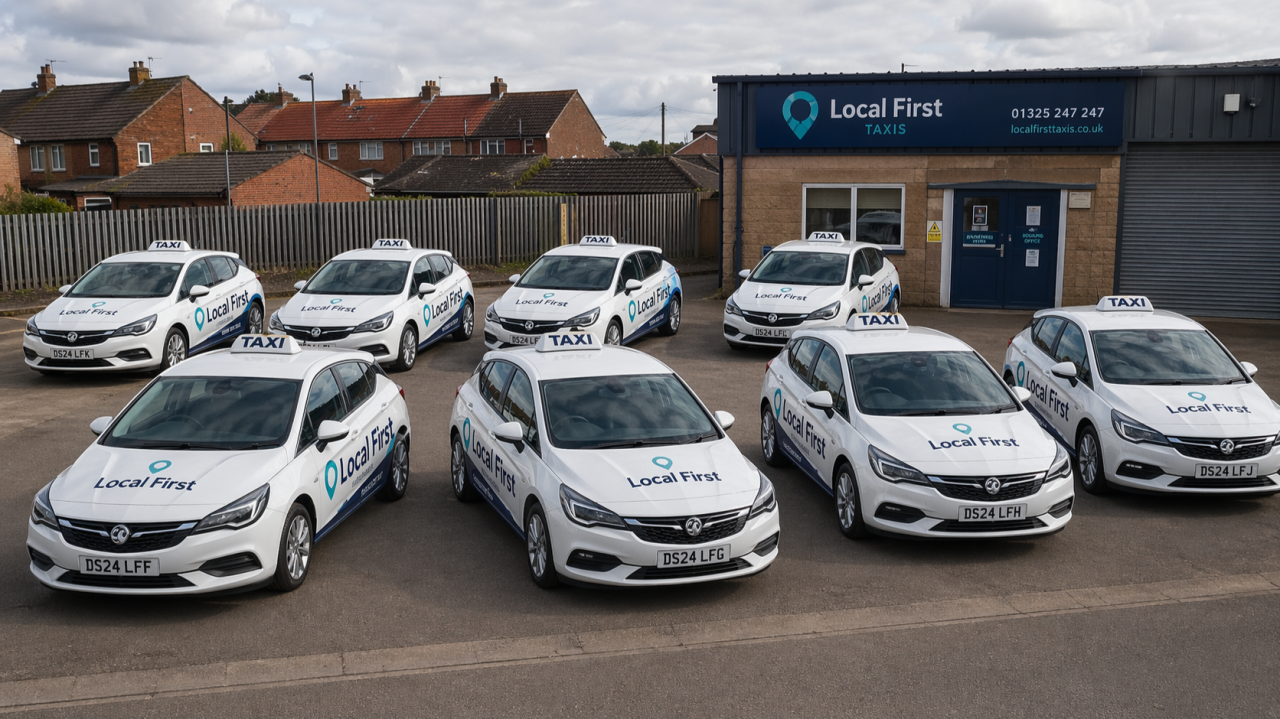
Apart from my own time, which is of course priceless, and the increasing cost of local compute power (I could have bought 8 2016 Vauxhall Astras and now be running a private car hire company instead of sitting a fleet of 5090 and mac ultra studios), the third highest expense as a founder/CTO is AI subscriptions. What I am hearing is these are likely to increase significantly if frontier models are your thing. As result of autonomous agent workflows (openclaw etc) , which has seen the average non enterprise user's burden on cloud AI service sky rocket, the likes of Anthropic, OpenAI and even Github are drawing lines in the sand, re pricing their subscriptions and removing vague fair usage models.
At the same time local host models are seeing some positive capability improvement , its reasonable to run a significant part of your AI service on locally hosted LLMs now. This begs the question, where should personal AI compute live ? But here is the reality: The "all-you-can-eat" era of Cloud AI is dead. If you don't move your primary compute home, your margins are at the mercy of provider "fair use" whims. 1. The Death of the $20 Frontier Seat The economic model of cloud AI was built for Chat-human-speed interaction.
It was not built for Agents. With the rise of autonomous workflows like OpenClaw, the burden on cloud providers has skyrocketed. A single developer using an agentic loop can consume more compute in one afternoon than a standard "Pro" user consumes in a month. This has forced a hard "line in the sand" from the Big Three: - Usage Multipliers: Providers are moving toward "token-weighted" tiers. If you use the most capable models for agentic loops, your "unlimited" plan is now being throttled or metered. - The End of "Fair Use": Anthropic and OpenAI have tightened their "Fair Use" clauses, moving heavy users toward Enterprise seats that can cost $150-$300 per month, per user.
- Latency Caps: To preserve GPU clusters for API customers, "Pro" web users are seeing increased "thinking" delays, which is a death sentence for autonomous agents that require fast iterative loops. 2. The 2026 Local Parity While cloud costs are scaling up, the barrier to entry for local hosting has dropped. In 2026, we have reached a "Sovereign Parity" point. - Quantization Efficiency: Modern 70B and 405B models, when properly quantized, now perform within a 5% margin of frontier cloud models for 90% of coding and reasoning tasks.
- The Hardware ROI: While an "8-Astra" investment in H100-class workstations or high-VRAM Mac Studios feels steep, the break-even point is shrinking. For a team of five developers running agents daily, local hardware pays for itself in under 18 months compared to "Enterprise" cloud tiers. - Zero Marginal Cost: Once the hardware is on your desk or in your homelab, a million tokens cost you only the price of electricity. 3. The Architecture of "Local-First" Where should your personal AI computer live? The answer is no longer "in the cloud.
" The strategic CTO now builds a Hybrid Inference Pipeline: The Local Core (85% of Workload) Run your agents (OpenClaw, etc.), your RAG (Retrieval-Augmented Generation), and your routine code refactoring on local VRAM. - The Benefit: Sub-second latency and absolute data privacy. Your IP never leaves your LAN. The Cloud Peak (15% of Workload) Reserve your cloud subscriptions for the "Frontier Peak"-tasks that require the absolute ceiling of reasoning or models that are too large to fit in your local VRAM. The Bottom Line If your agents are running 24/7 against cloud APIs, you aren't just a customer; you're a victim of Inference Inflation.
The smart move in 2026 is to treat compute like a utility you own, not a service you rent. Bring your main AI computer home-to your desk, your server rack, or your homelab. Reclaim your sovereignty, kill the latency, and stop paying for the cloud's overhead. It's time to bring the intelligence back to the edge.